Role
UX Researcher, UX/UI Designer
Duration
1 Week
Tools
Figma
I designed an AI-assisted writing experience focused on helping job seekers review and trust AI-generated suggestions before submission, rather than accepting them blindly.
Designing Trustworthy AI Writing Experiences
PROBLEM
While AI helped me write faster and produce polished drafts, I often hesitated before submitting because I couldn’t tell whether the content was truly personal or just a generic response, making it hard to confidently trust the first output.
When job seeking, I didn’t fully trust what AI wrote for me
UNDERSTAND
Before designing a solution, I needed clarity on how users interact with AI-generated writing and where they face friction. Specifically:
How do users know which text is AI-generated, and how visible does it need to be?
What kinds of control do users want when reviewing AI suggestions?
What reassurance or explanations do users need to trust AI output?
How can AI suggestions feel personalised and aligned with the user’s authentic voice?
What I need to understand before designing
UNDERSTAND
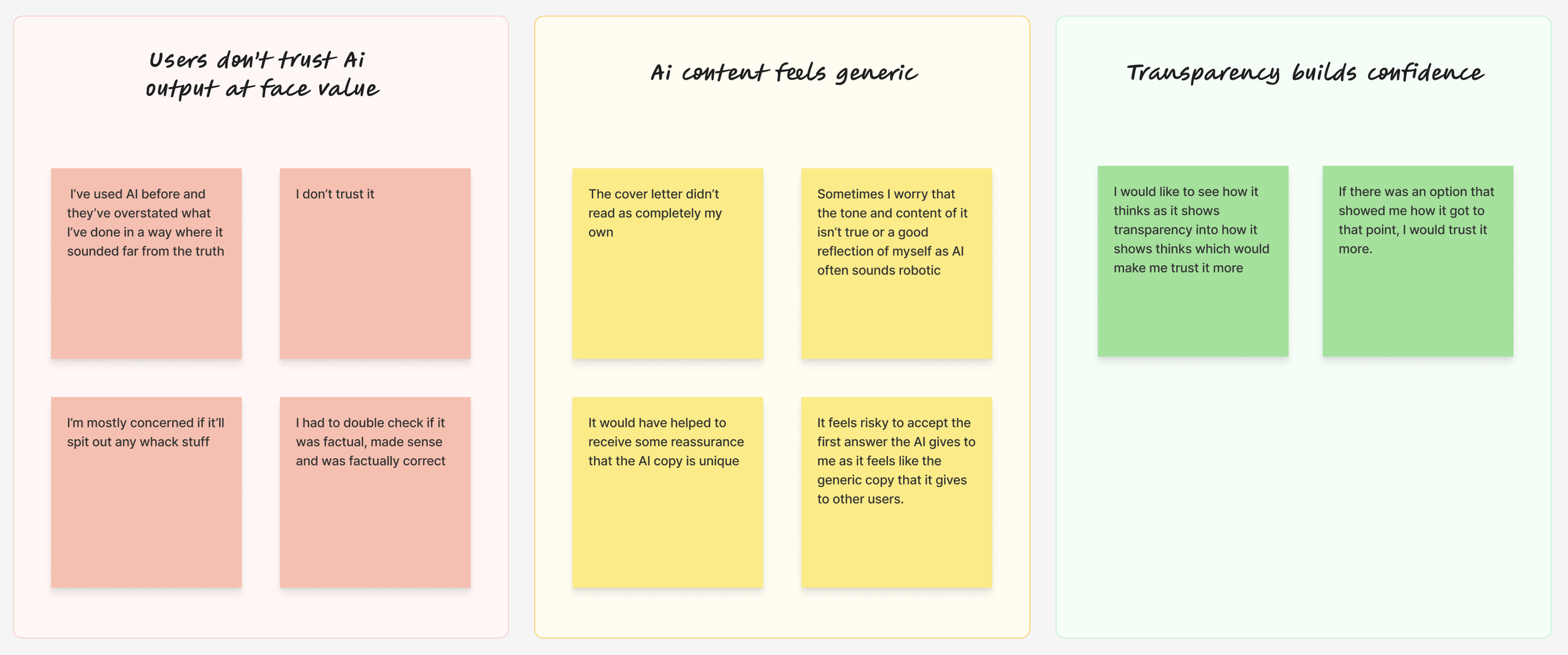
I talked to job seekers about their AI writing experience
From the interviews, it was clear that job seekers don’t fully trust AI-written content without reviewing it first, often because it feels generic or not quite like them. Instead of wanting AI to write everything for them, users preferred staying in control and wanted more transparency into how AI comes up with its content.
RESEARCH
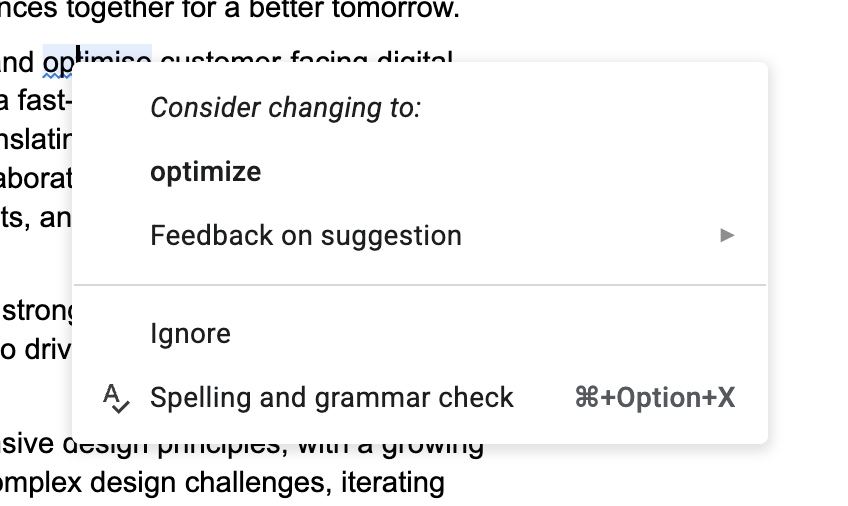
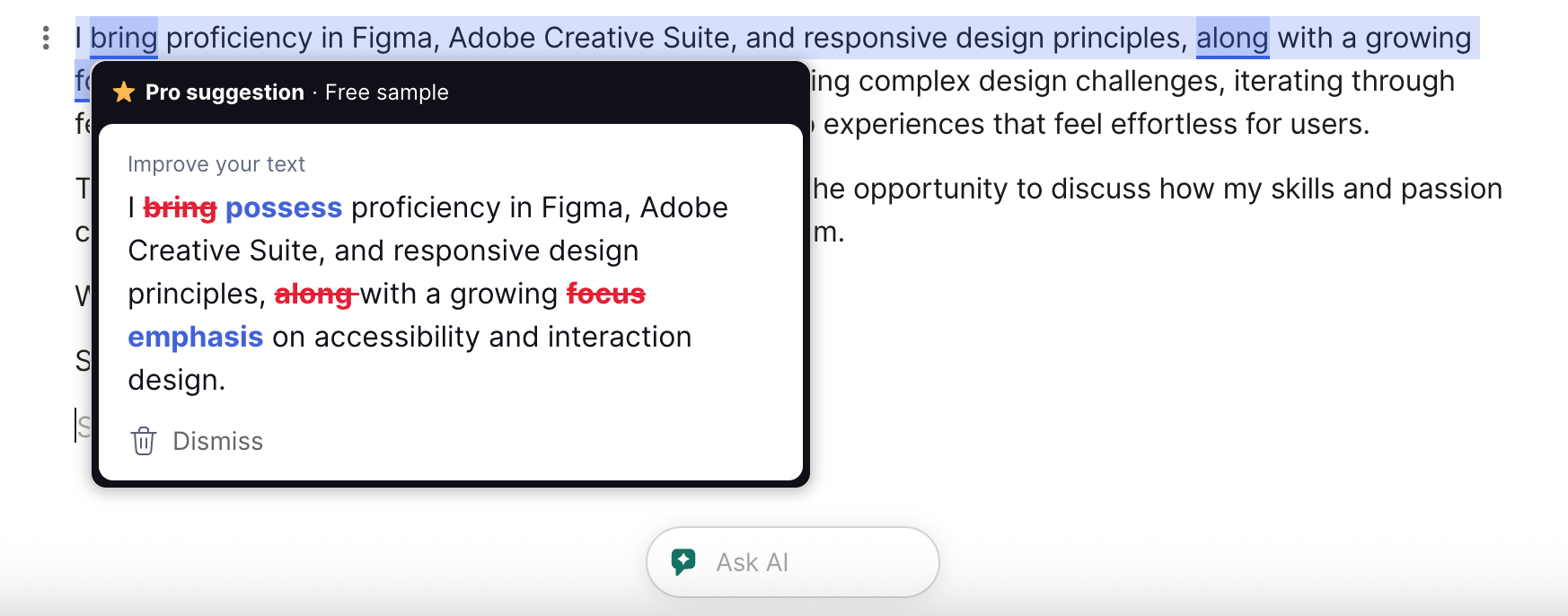
Then, I started to look at how others do it
From analysing ChatGPT, Grammarly, and Google Docs AI, I learned that while some tools offer control and inline editing, most lack clear visibility, meaningful explanations, risk signals, and personalisation. This revealed an opportunity to design a solution with inline AI suggestions, clear authorship, contextual explanations, reassurance for generic content, and outputs tailored to feel unique for each user.
DEFINE
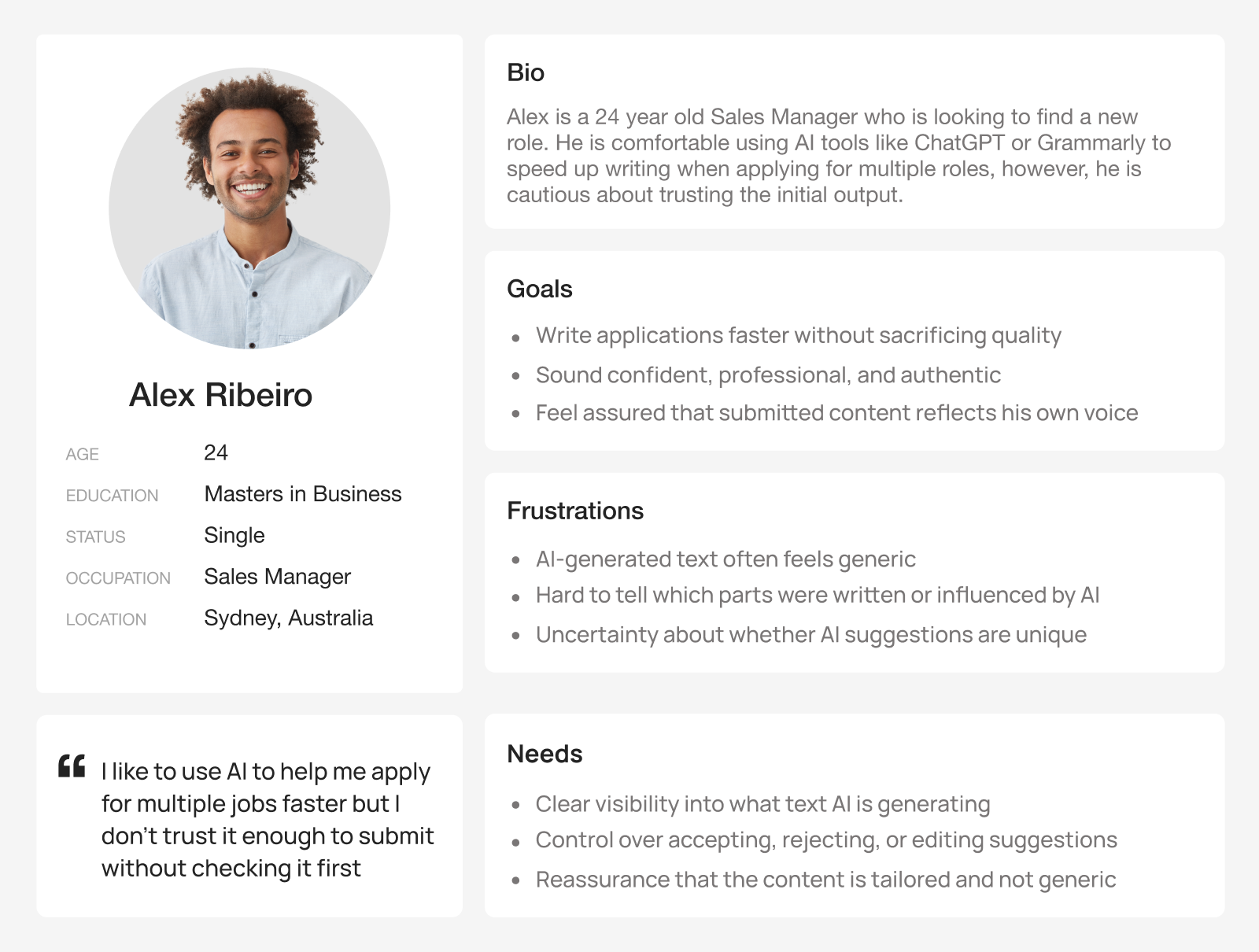
Meet the job seeker I designed for
This persona was created from my user research insights and helped define what the design should focus on as I moved into the prototyping stage.
DEFINE
Rather than redesigning a chat-based AI platform, I decided to focus on integrating AI writing suggestions into a document editor in a way that supports review, reassurance, and personalisation. The goal was to help users make confident decisions before submitting high-stakes application materials.
Using these insights, I redefined the problem to better reflect user’s needs and behaviours
DEFINE
I mapped out the current vs ideal user flow
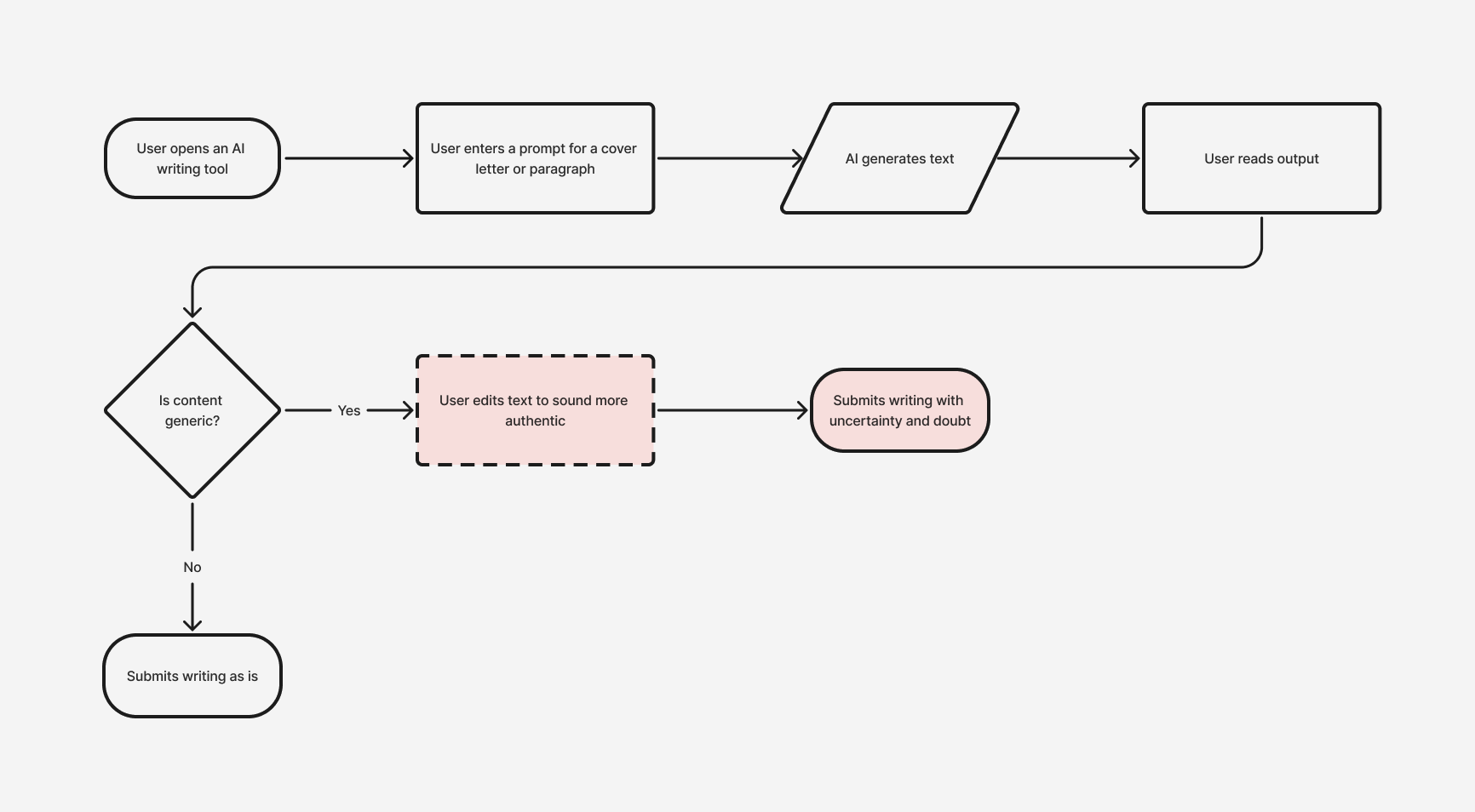
Current Flow
Ideal Flow
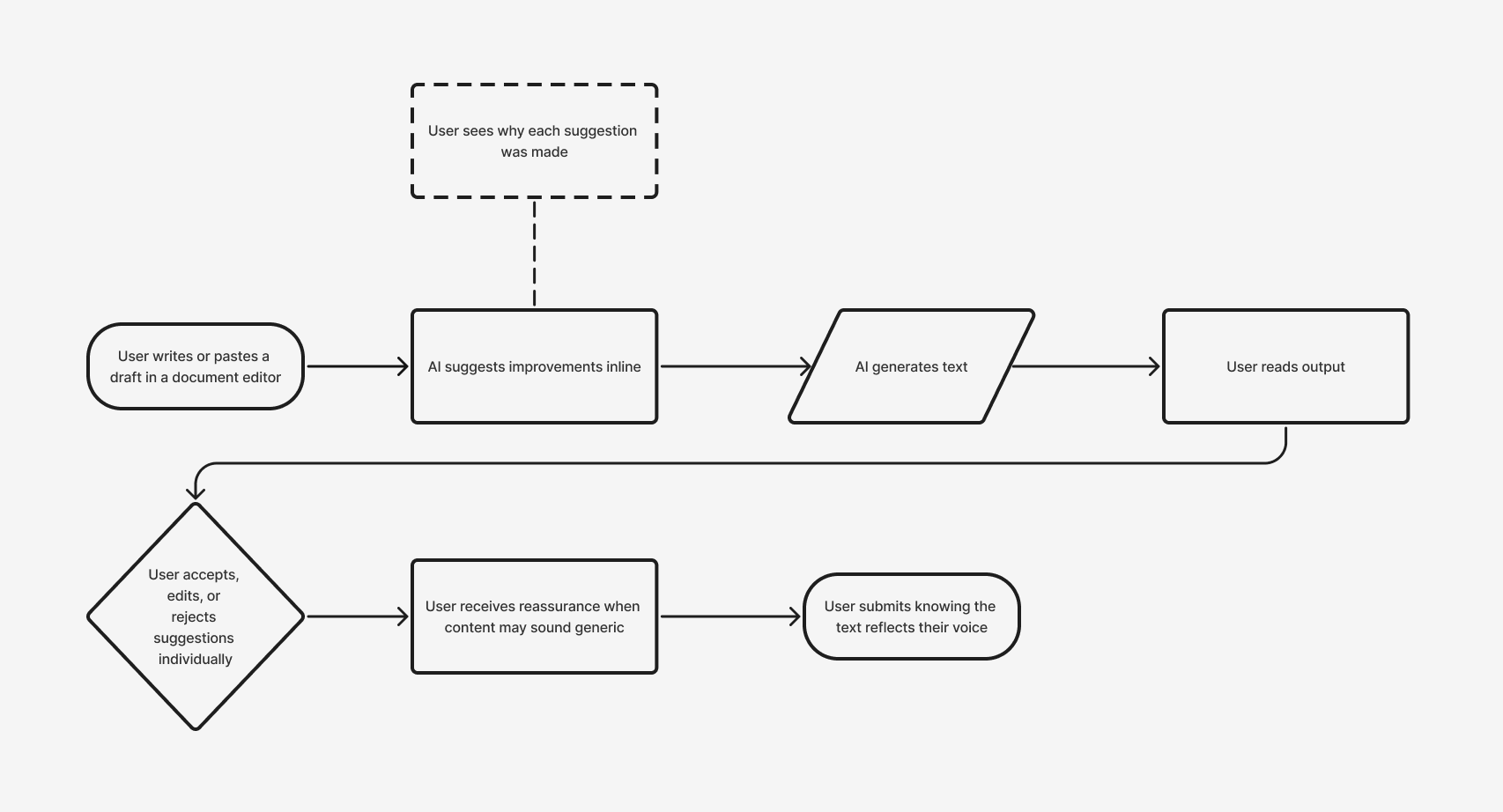
Instead of having AI write everything, the ideal flow lets users bring their own draft and use AI as a reviewer they can trust, keeping their voice intact.
PROTOTYPE
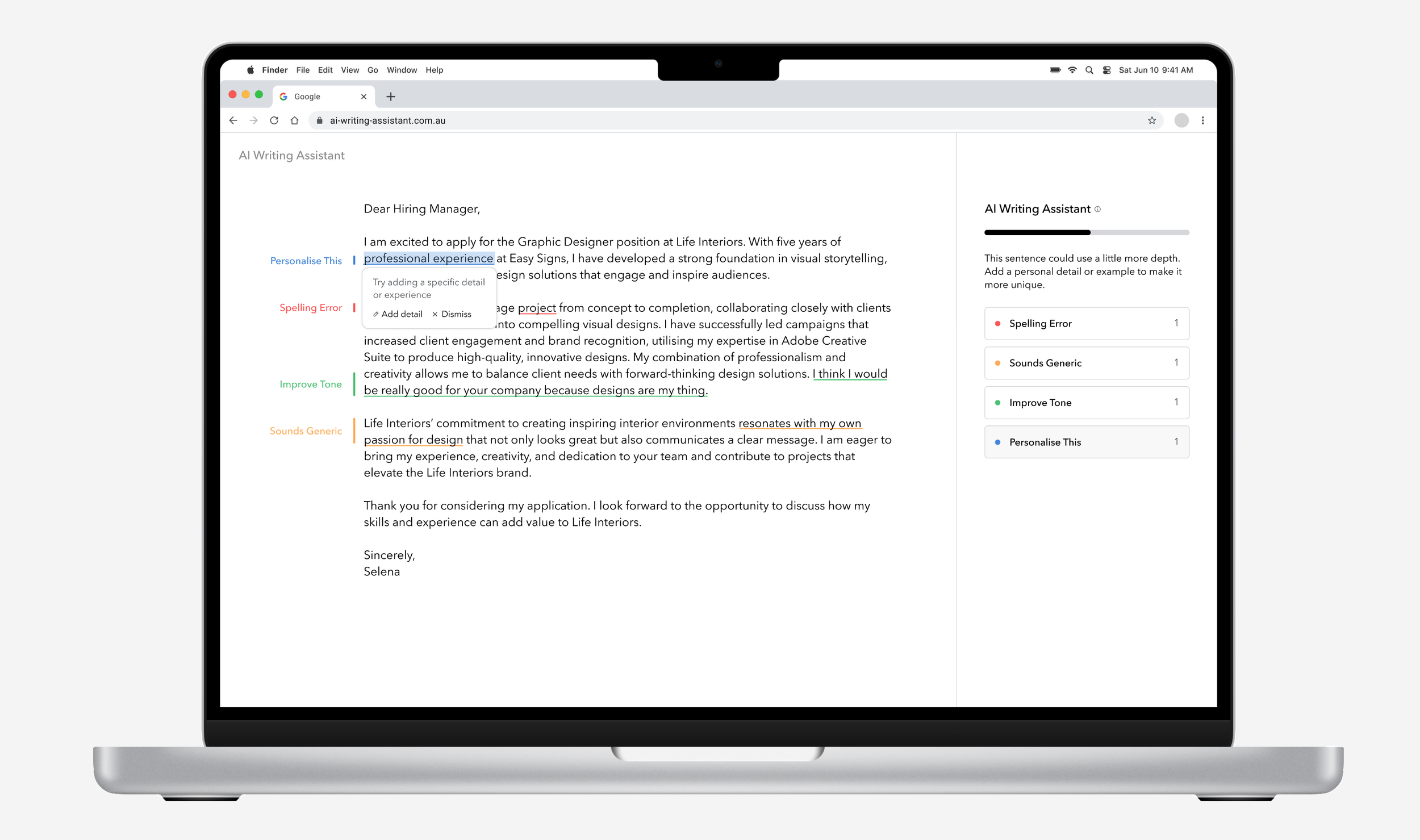
Bringing trust and personalisation into the AI writing experience
I designed an AI writing experience that supports review and refinement, helping users stay in control while feeling confident their writing is personal and unique.
USER TESTING
I took it to our users to test the solution
This was a short case study, so I focused on exploring the core problem of trust in AI-assisted writing rather than validating every interaction in depth. With more time, I would run additional usability testing, built out the prototype further, and refined the warning hierarchy and titles to ensure the most important suggestions stand out and feel supportive rather than overwhelming during the editing process.
What I learned
REFLECTION
User testing showed that participants felt more confident using AI when suggestions were clearly labelled and optional, especially when they were prompted to add their own details. However, some users found the warnings slightly overwhelming at first and wanted clearer guidance on which suggestions were most important to address.